A Large Market With Very Different Signals
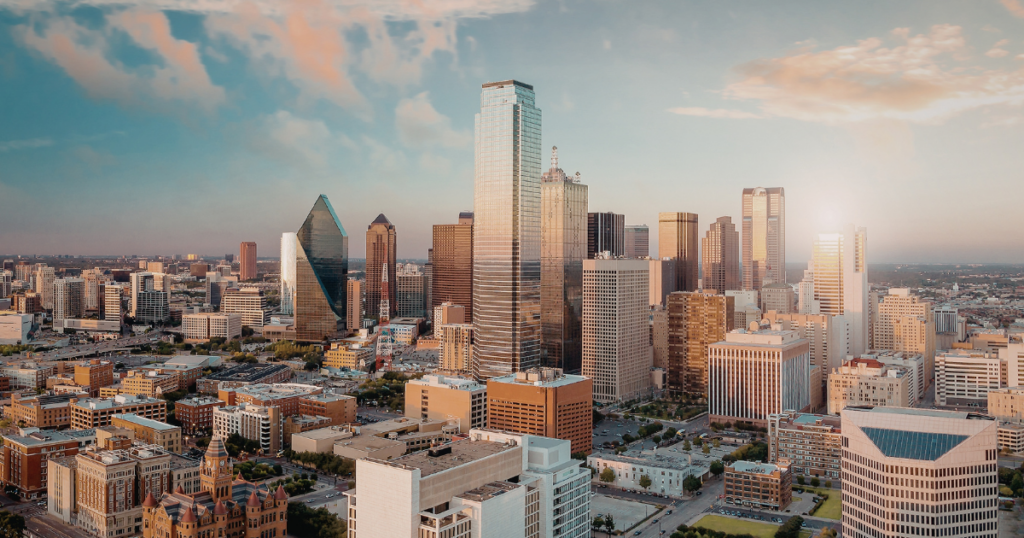
Dallas is one of the largest coworking markets in the U.S., with more than 6.7 million square feet of inventory and nearly 30% year-over-year growth, according to a recent CoworkingCafe report.
On paper, that kind of growth suggests strong, consistent demand.
But in reality, coworking demand in Dallas is highly localized.
What works in one part of the metroplex often doesn’t translate to another—and that shows up most clearly in how tenants search for and evaluate space.
Uptown & Downtown: Experience-Driven, High-Expectation Users
Submarkets like Uptown, Park Cities, the Arts District, and the Downtown core attract:
- financial services firms
- law firms
- corporate satellite teams
- high-growth startups competing for talent
In these areas, tenants aren’t just looking for space—they’re evaluating experience.
They expect:
- high-end design
- hospitality-level amenities
- walkability and proximity to restaurants and retail
- spaces that help attract and retain employees
Search behavior tends to shift toward:
- premium workspace
- private offices in central locations
- flexible space with high-end amenities
Deep Ellum & Creative Districts: Community and Flexibility
In areas like Deep Ellum and surrounding creative hubs, demand looks very different.
Tenants here often include:
- startups and early-stage companies
- creatives, freelancers, and media professionals
- small teams prioritizing culture and collaboration
They expect:
- flexible terms
- community-driven environments
- unique, design-forward spaces
- affordability relative to Uptown
Search behavior tends to shift toward:
- coworking community
- creative workspace
- flexible office options
The expectation isn’t corporate polish—it’s identity and adaptability.
Design District & Oak Cliff: Niche and Boutique Demand
These submarkets attract more specialized users, including:
- architects and designers
- boutique firms
- independent professionals
Demand here is smaller in volume, but more specific.
They expect:
- character-driven spaces
- smaller footprints
- environments that align with their brand
Search behavior tends to shift toward:
- design-forward office space
- creative coworking environments
- private studios or boutique suites
- unique or historic buildings
- flexible leases with personality
Marketing in these areas requires a more targeted approach, because broad messaging doesn’t resonate.
North Dallas, Plano & Suburban Corridors: Convenience and Hybrid Work
Suburban markets like Plano, Richardson, and North Dallas are seeing some of the most consistent growth.
Driven by hybrid work, these areas attract:
- corporate employees working closer to home
- hybrid teams
- professional services firms
They expect:
- accessibility and covered parking
- proximity to residential areas
- ease of use
- straightforward, professional environments
Search behavior tends to shift toward:
- office space near me
- workspace close to [zip code]
- flexible office in suburban areas
Across all submarkets, practical, day-to-day amenities like on-site gyms, notary services, lunch delivery, and integrated cafés or coffee shops consistently influence final decisions, often tipping the scale when core offerings are otherwise comparable.
The Underlying Trend: Prioritizing Quality & Amenities
Across all submarkets, one trend remains consistent: the shift from space as a commodity to space as an experience that supports how people actually work and live.
Tenants are prioritizing quality, amenities, and convenience.
Updated, amenity-rich environments continue to outperform legacy buildings that are not reflective of these trends, especially in high-demand areas like Uptown and Legacy West.
Owners tend to forget that coworking is an amenity in itself. It’s not just a product your building offers, it’s a value-add that enhances the overall appeal, supports tenant retention, and helps the property stay competitive.
See how our experience in the Dallas market reshaped how we approach coworking strategy.
Let’s Talk
If coworking is on your radar as a part of your overall portfolio strategy, let’s have a conversation.
We work with building owners to develop strategies that align with their specific location—not a pre-packaged model.
You can also see how this approach comes to life across our Dallas locations, including Flex at The Gild, Strive North Dallas, and Strive Plano.